Our Work in Bolivia
For over fifteen years, Healing the Children North East (HTCNE) of the United States and the Sirari Rotary Club of Santa Cruz de la Sierra, Bolivia, have organized an annual week-long surgical campaign during which children with cleft lip and palate receive corrective surgeries free of charge. The surgical program has been led by Dr. Steven Roser, DMD, MD, of Emory University, and Dr. Vincent Carrao, DDS, MD, of Mount Sinai, New York.
Once HTCNE team, which include maxilofacial surgeons, anesthesiologists, pediatricians, specialized nurses, speech language pathologists, technicians, students, and team coordinator return to the United States, the long-term follow-up of patients remains under the care of local professionals in Bolivia. Their progress is monitored by interdisciplinary teams that include local specialists in maxilofacial surgery, orthodontics, and pediatrics, working in coordination with the Sirari Rotary Club.
Four years ago, the Catholic University of Santa Cruz de la Sierra inaugurated its Department of Fonoaudiology, one of the few programs of its kind in the country. The program’s first cohort of students is expected to graduate within the next two years, marking an important milestone for the development of fonoaudiology in the region.
Three years ago, the Sirari Rotary Club and the Catholic University of Santa Cruz de la Sierra established a partnership to develop protocols for the follow-up care of children receiving cleft lip and palate surgery through the HTCNE program.
This follow-up process is essential for evaluating patient outcomes, identifying best practices in post-surgical care, and strengthening local capacity so that long-term treatment can increasingly be led and sustained by local professionals.
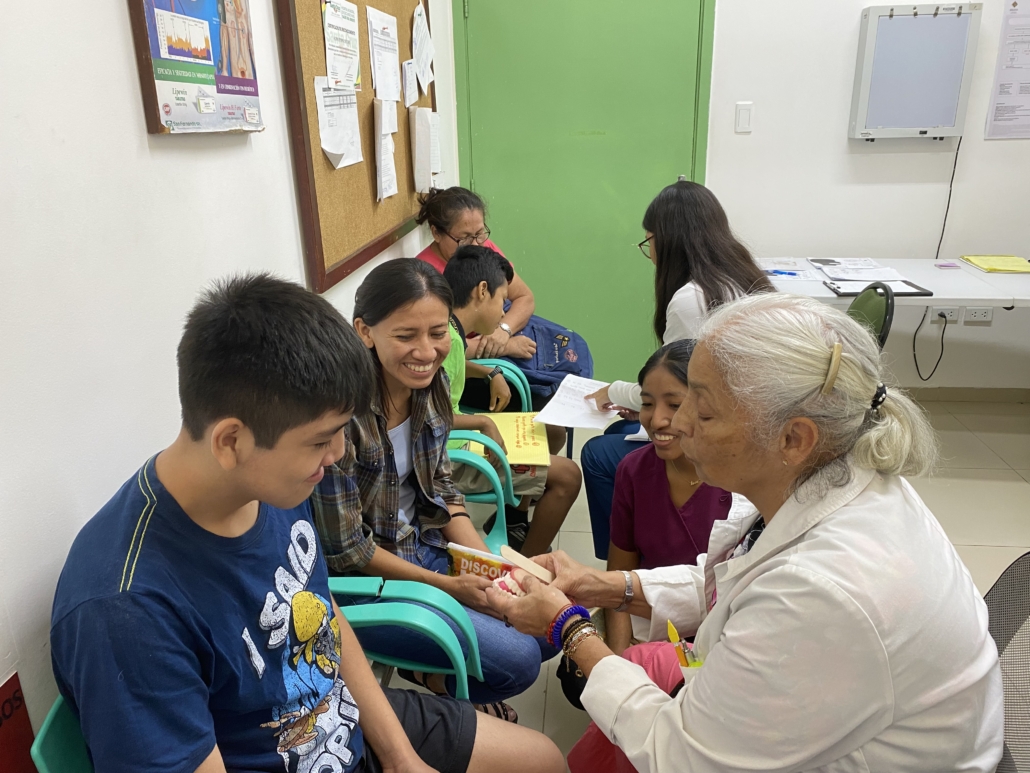
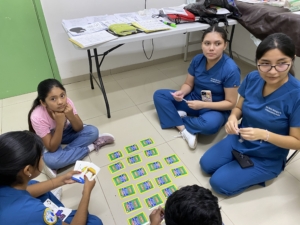
As part of this effort, professionals such as myself contribute to the training and mentorship of students in the program. During the 2026 surgical campaign, held from January 17 to January 24, I trained four students in the evaluation and treatment of hypernasality in post-surgical cleft palate patients.
The training included identifying parameters of hypernasality, applying therapeutic techniques to reduce hypernasal speech (when possible), and teaching strategies for proper speech production. Students were also trained to guide parents and caregivers so they can support the children in practicing speech exercises at home.
Such post-surgical care is essential, because while surgery is a critical step, proper follow-up therapy is needed for patients to fully realize the functional benefits of the intervention, and thus ensure successful outcomes in speech production, particularly for cleft palate patients.
The follow-up initiative in Bolivia includes plans to establish a permanent clinic in Santa Cruz de la Sierra where patients can receive post-surgical care. The facility is expected to be operational by 2028. In the meantime, a temporary consultation space is being negotiated, and will allow students to begin providing follow-up therapy under the supervision of university faculty.
By integrating structured follow-up care—including speech therapy and training for parents and caregivers—this program establishes a more comprehensive model of treatment. This initiative is intended to serve as a pilot program within the HTCNE network, with the goal of replicating this model in other countries where cleft lip and palate surgical campaigns are carried out.
This approach could become a standard practice not only for cleft care programs but for humanitarian medical initiatives more broadly, recognizing that meaningful care extends beyond the operating room.
Ultimately, the success of these children depends on a network of support. Their recovery and development require ongoing care, family involvement, and community engagement. As this program grows, it is my hope that sustained collaboration between surgical teams, local professionals, families, and educational institutions will create lasting change for patients and their communities.
Ysabella Hincapié-Gara
MSEd., MA CCC-SLP


What an amazing contribution to the lives of these children. Beautiful work. Congratulations.